Case studies by crop · Permanent crops
Orange orchard: red mites (Agras T16)
DJI Agriculture case study, collected by FLYDROPS.
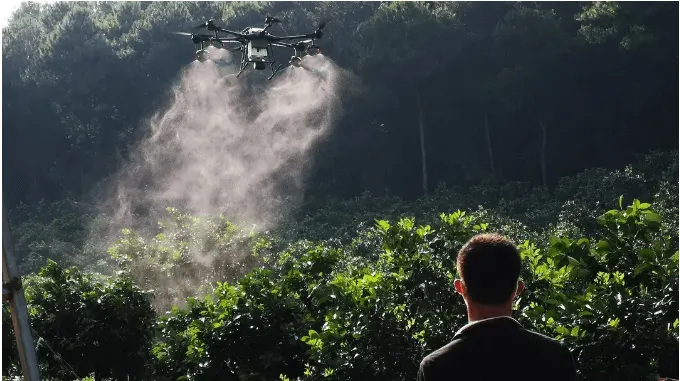
In an 11-hectare orange orchard in Jiangxi province, China, with steep slopes and a height difference of up to 60 m, a red mite infestation was dealt with using an Agras T16 in two days. Within a week over 90% of the mites were gone.
At a glance
| Location | Dayu, Ganzhou, Jiangxi Province, China |
|---|---|
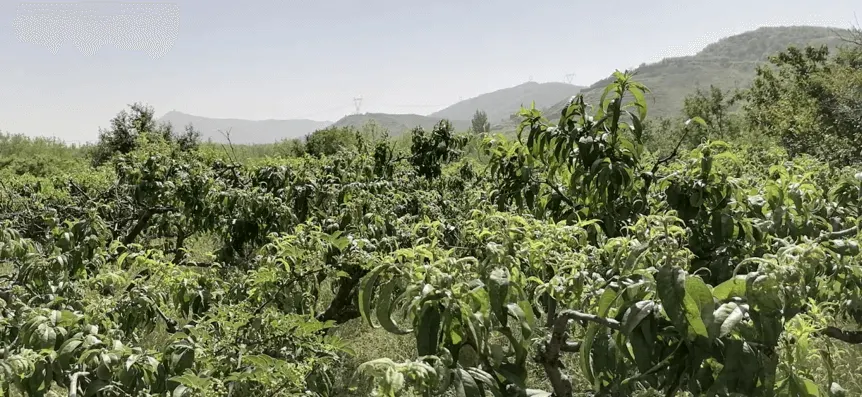
| Crop | Newhall navel oranges, 4 years old, about 2.5 m tall |
| Area | 11 hectares on three adjacent hilltops |
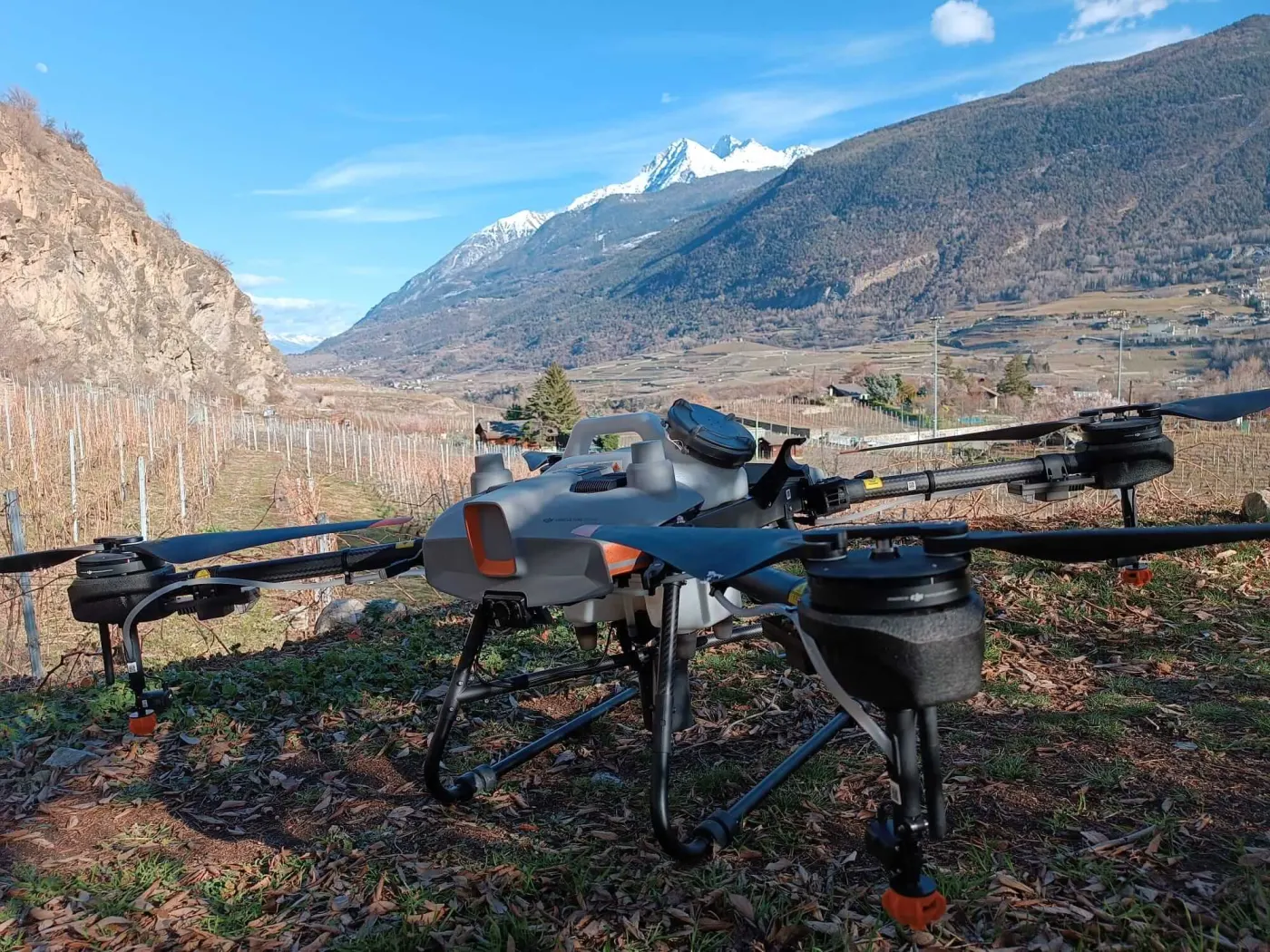
| Drone | DJI Agras T16 (Fruit Tree Mode 2.0) and a Phantom 4 RTK for mapping |
| Date | 2 July 2019 |
| Operator | Ganzhou Chengfeng Intelligent Technology crop protection team |
The study uses the T16, an earlier generation. The current range is DJI Agras T100, T70P, T55 and T25P; find which one fits your acreage or compare the models.
The challenge
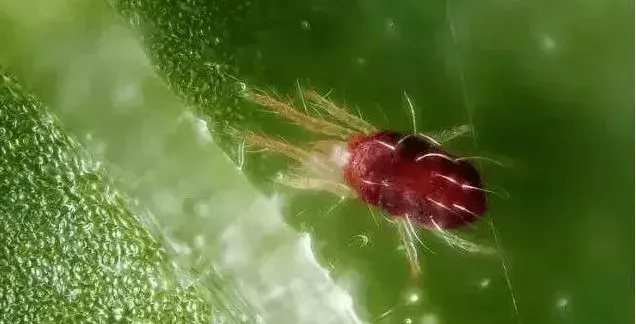
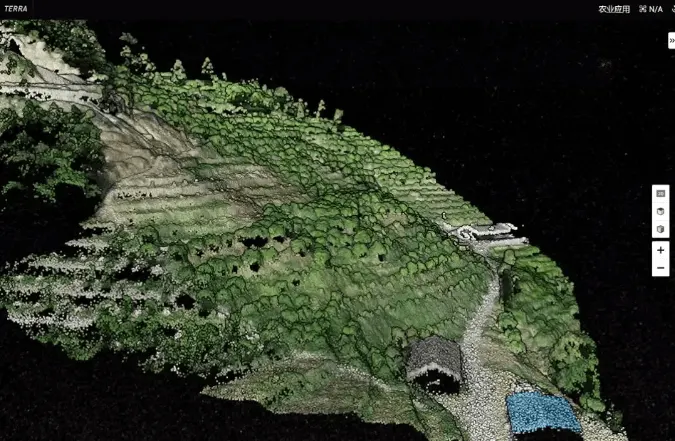
Citrus red mites suck the sap of the plants and cause leaf and fruit drop. They hide on the underside of the leaves, which is why crop protection in fruit trees is harder than in field crops. Here the steep slope added to it, with spraying until then done by hand, slowly and with poor results.
What was done
The team worked in three steps:
- Mapping in two rounds. First with a Phantom 4 RTK at 130 m and processing in DJI Terra. Because the height difference was over 40 m, a second round was flown with terrain follow at 70 m so the route heights came out right.
- Route planning. The tree canopy exceeds 4 m, so continuous spraying with a 3D route was used.
- Flight. Fruit Tree Mode 2.0, height 2 m, speed 2 m/s, flow 2.5 L/min, spacing 3 m and over 60 L/ha. The slow speed and large volume are the key to getting the spray to the base and the back of the leaves.
The results
| Measure | Result |
|---|---|
| Mites | Began to die the next day; over 90% gone within a week |
| After the operation | No further red mite infestation in 2019 |
| Work rate | A worker about 0.7 ha/day; the drone 1.3 ha/hour |
| Flow by tree age | Under 4 years 2.5 L/min, 4–8 years 3 L/min, over 8 years 3.5 L/min |
The numbers come from the study and relate to that specific application.
The team’s conclusions: larger volume and lower speed on large canopies, products with strong systemic action, and fewer spraying rounds than by hand. The pilot should watch the flight constantly in the complex terrain.
What it means for Greece
Citrus is grown in Greece, for example in Argolida, Laconia, Chania and Arta, often on sloping land, and mites (tetranychids) are a known problem in fruit trees. The important lesson is the method: mapping before spraying, slow flight, large volume. The study is from China, with young 4-year-old trees; the settings do not carry over unchanged to large Greek trees. If you are interested in mapping, see the Phantom 4 RTK.
Rules and responsibilities
In Greece, applying plant protection products from the air, drones included, is prohibited as a rule and allowed only by derogation with a special permit. The study shows what happened in another country; it does not mean the same application is allowed in Greece. The product label always applies, and we do not repeat doses or products here. See the framework in the spraying drone buying guide and confirm it with the competent authority.
See also
Want to see what this means in your own field? Request a quote or call (+30) 2391 301149 and we will recommend the right setup.
DJI Agriculture case study, “Can DJI AGRAS T16 eradicate citrus red mites? Let the facts speak for themselves.” (17 November 2022). Translated and adapted by FLYDROPS. Results depend on the conditions of each field. Read the original.
See also
Application case studies by crop
Contact
Let’s talk about your fields.
Tell us what you grow and what you want to achieve. We’ll recommend the right equipment and send you a quote.