Quick answer
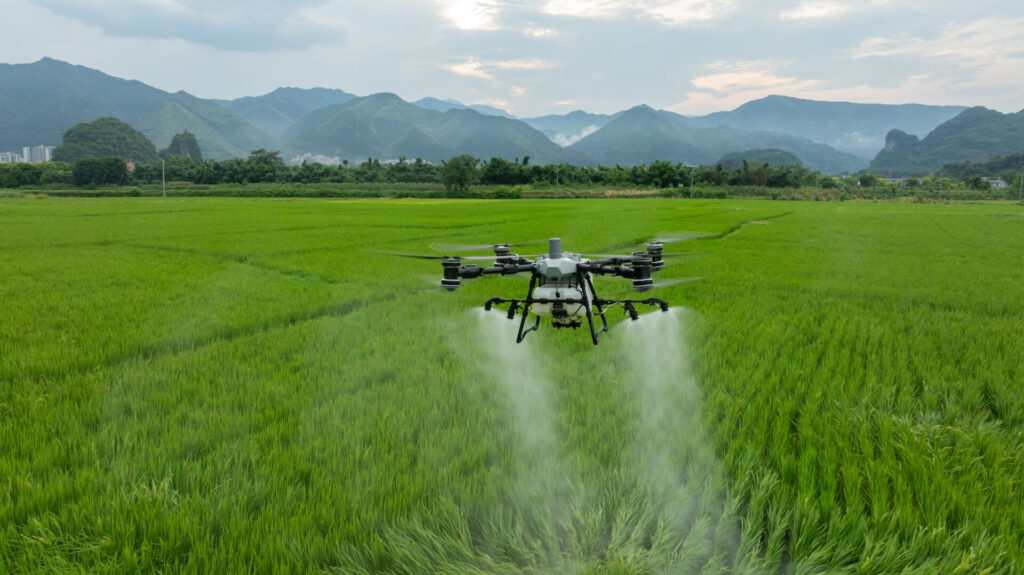
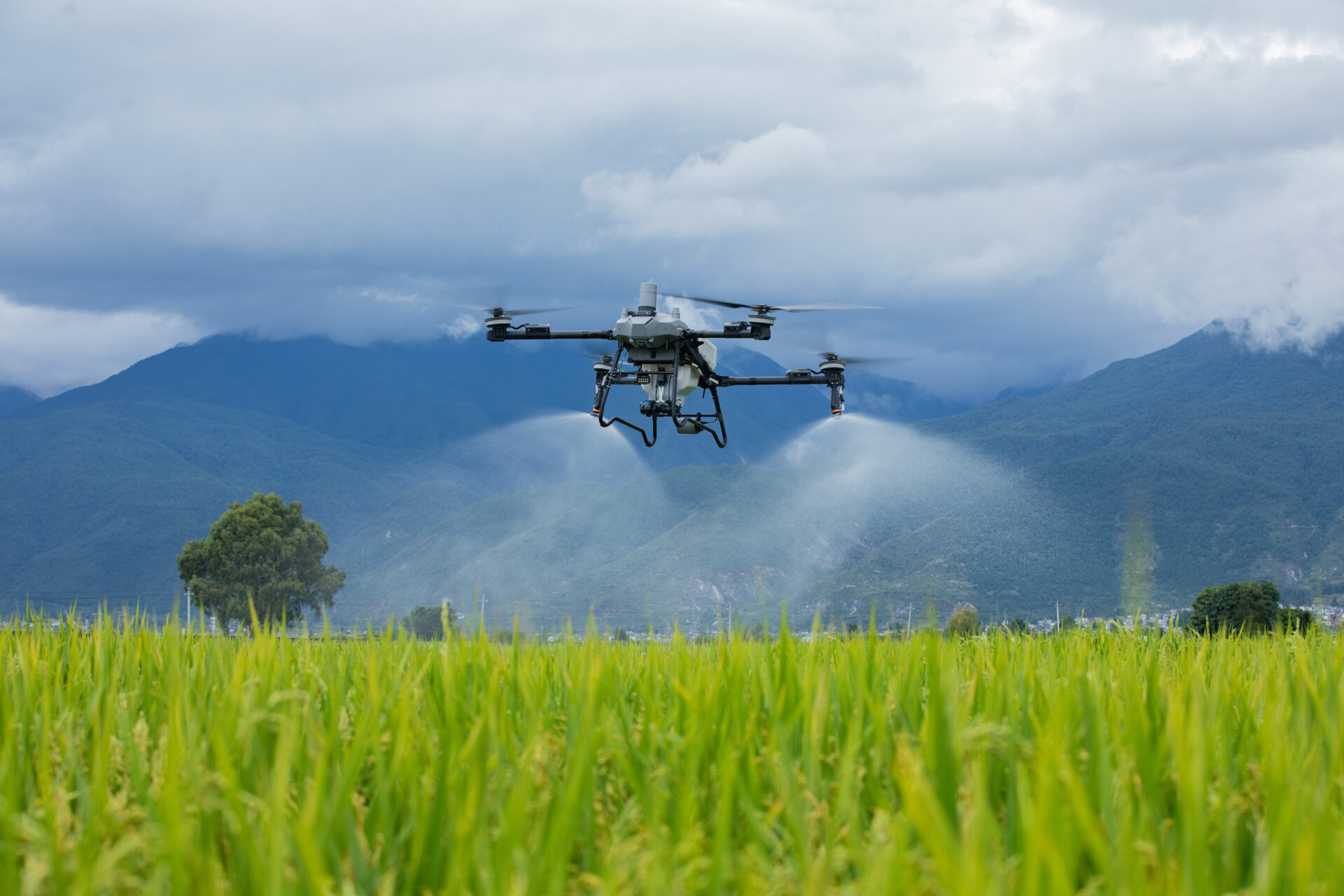
After heavy rain a tractor often can’t enter the field, just as fungal pressure rises. A spraying drone doesn’t touch the ground, so it can spray while the field is muddy. It still needs the right weather window: no rain during application or for the period the product label requires, low wind, and always within the permit conditions.
The window that rain closes
After heavy rain, conditions in the crop can deteriorate quickly: moisture favours fungi and the spray programme won’t wait. The problem is that on exactly those days the tractor can’t get in: tyres sink, the soil compacts and every pass leaves ruts. In bad-weather periods, large areas go untreated just when they need it most.
What the drone does differently
- It doesn’t touch the soil: it flies above the crop, leaving no tracks and causing no compaction.
- It uses short windows: early morning or late afternoon, when wind and temperature favour application. The latest models are also equipped for night flights, where the permit conditions allow it.
- It penetrates the canopy: the propeller downwash opens up dense foliage and helps the spray reach lower in the plant.
- It moves fast: since it doesn’t wait for the ground to dry, application can start as soon as the weather allows.
Practical tips for spraying after rain
- Check the forecast: look for the first period with low wind and no rain for as long as the product needs to stay on the leaf, as stated on the label.
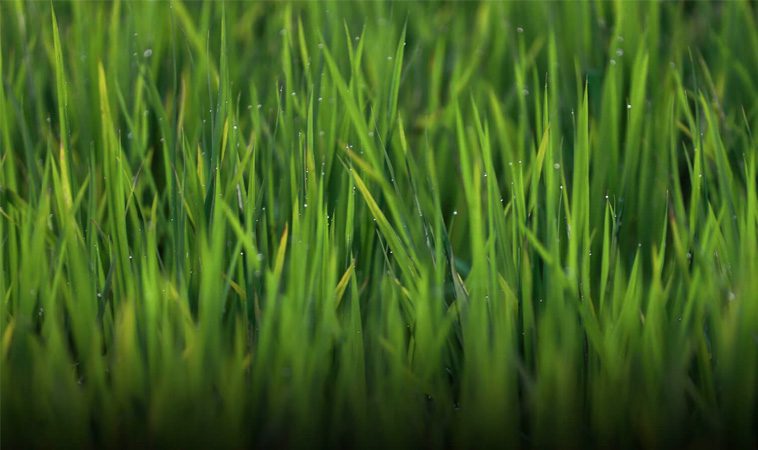
- Let the foliage drain: on dripping leaves, part of the spray runs off to the ground. Ask your agronomist when application is appropriate for the specific product.
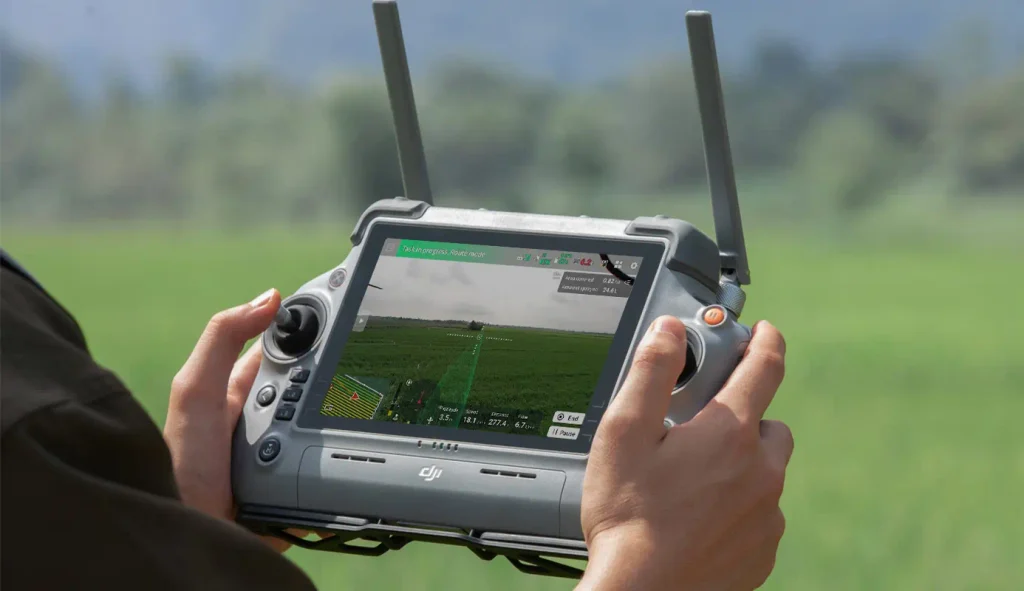
- Adjust rate and droplet size: the right volume per stremma and droplet size matter even more in difficult conditions. Set up the drone according to your agronomist’s recommendation.
- Watch the wind: keep within the wind limits of the aerial-spraying permit and the product label, to avoid off-target drift.
- Keep an application record: date, product, rate and conditions. Professional users of plant protection products are required to keep records. Ask your agronomist what needs to be recorded.
The legal framework still applies in bad weather
Spraying plant protection products by drone in Greece is only allowed by derogation, with a special aerial-spraying permit from the Ministry of Rural Development and Food and flight authorisation from the HCAA (Law 4036/2012). The need to act quickly after rain doesn’t remove that obligation. More in our spraying drone buying guide.
Drone and tractor: complementary
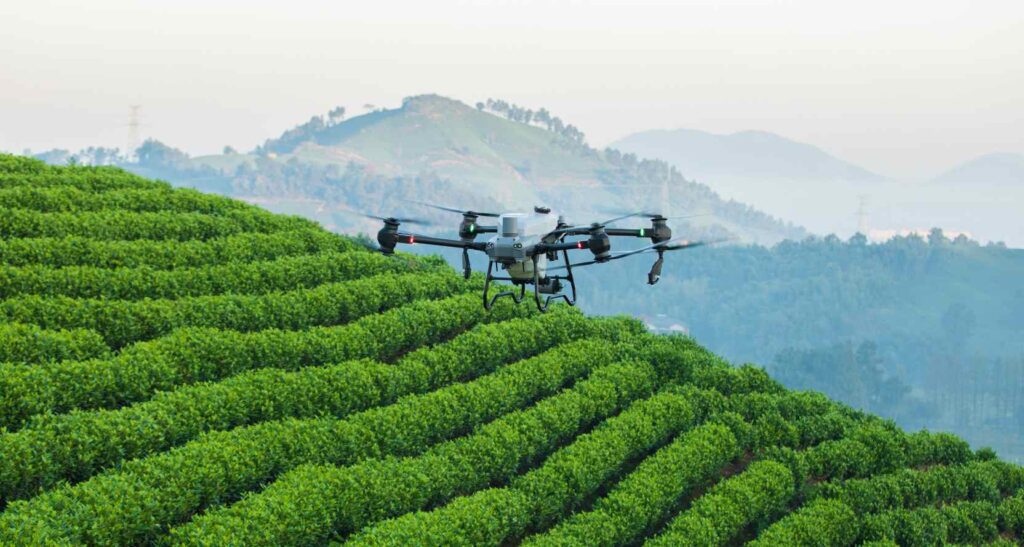
A spraying drone doesn’t replace the tractor for every job. But it covers exactly the days when the tractor struggles: after rain, in mud, in dense foliage and on slopes. See the full comparison in Tractor or spraying drone.
Frequently asked questions
Can a drone spray while it’s raining?
No. Rain washes the product off the leaves and reduces its effect. Spray once the rain has stopped, the foliage has drained and the forecast shows no rain for as long as the product label requires.
Does a drone damage a muddy field?
No. The drone doesn’t touch the ground, leaves no tracks and doesn’t compact the soil. That’s its main advantage in mud. It only needs a firm spot for take-off, refilling and battery changes.
How soon after rain can I spray?
As soon as conditions allow: no rain, low wind and foliage as dry as the product requires. The drone doesn’t have to wait for the ground to dry, which matters during periods of high fungal pressure.