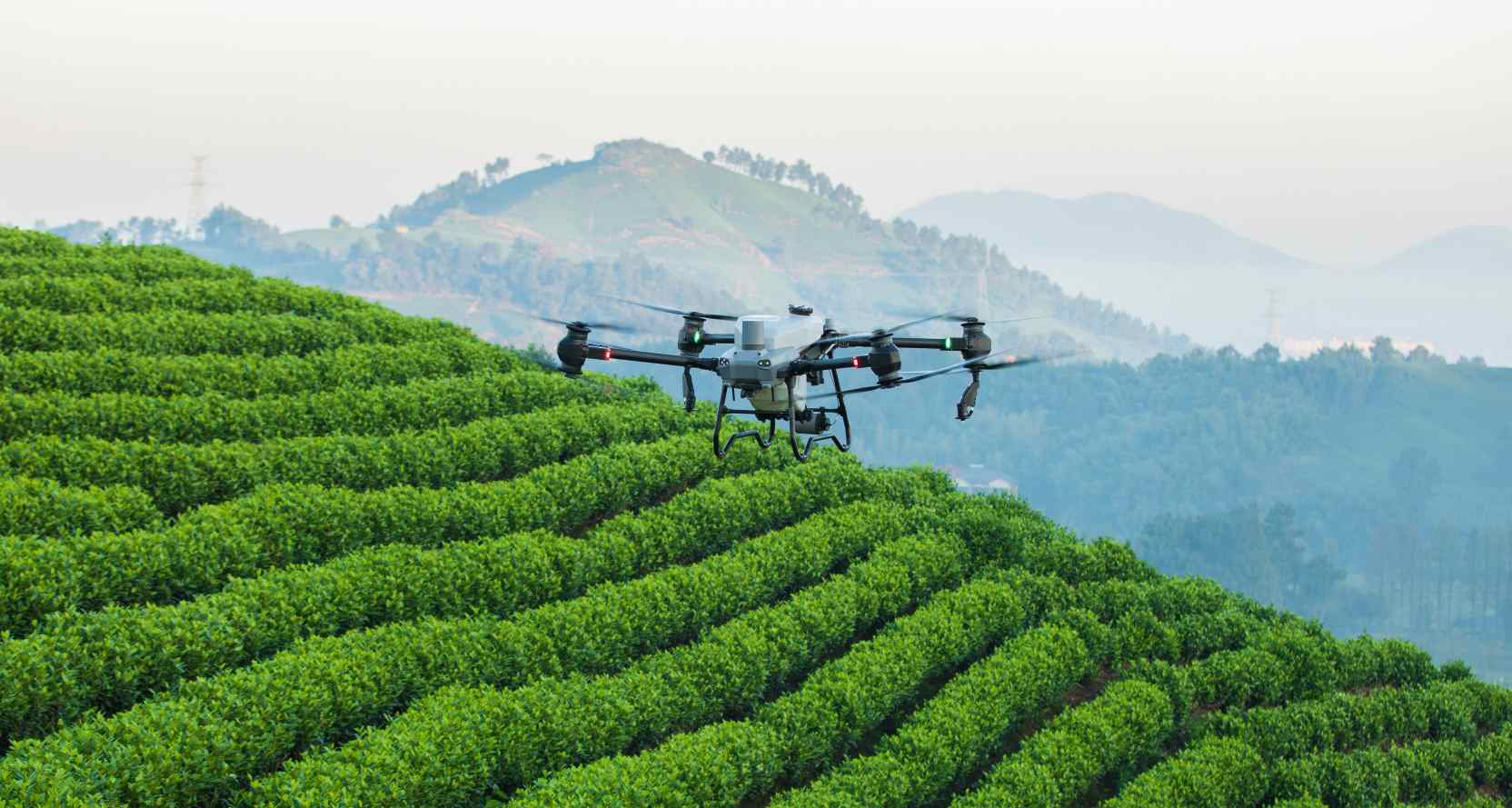
Quick answer
A spraying drone pays off mainly on small, fragmented or sloping fields, in crops whose rows have closed, and on days when the ground won’t carry a tractor. On large, flat fields with well-organised work, the tractor still has its place. Most farmers end up combining the two.
Fifteen years ago, spraying a field had one answer: a tractor with a sprayer. Today there are two options, and the right answer isn’t always the same. In this article we compare the two the way we discuss them every day with farmers in Northern Greece: cost per stremma (0.1 ha), time, ground conditions and quality of application.
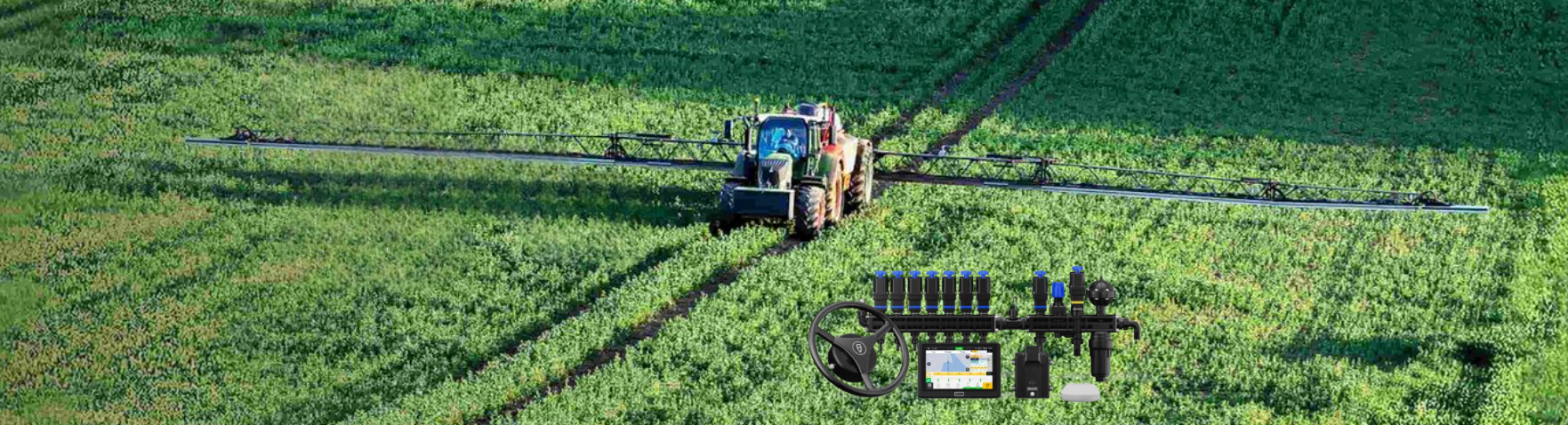
What tractor spraying really costs
Spraying with a tractor costs more than fuel and product. There are also costs you don’t see straight away:
- Soil compaction: every pass compacts the soil and leaves ruts, especially when the ground is wet after rain.
- Edges and obstacles: at field edges and around poles, trees and irrigation channels, tractor application gets difficult.
- Time: a flat field with a good route is sprayed quickly. A fragmented one, with slopes or trees, is not.
- Crop damage: in vineyards, orchards and tall crops, wheels and booms can damage shoots and fruit.
Where a drone can go and a tractor can’t
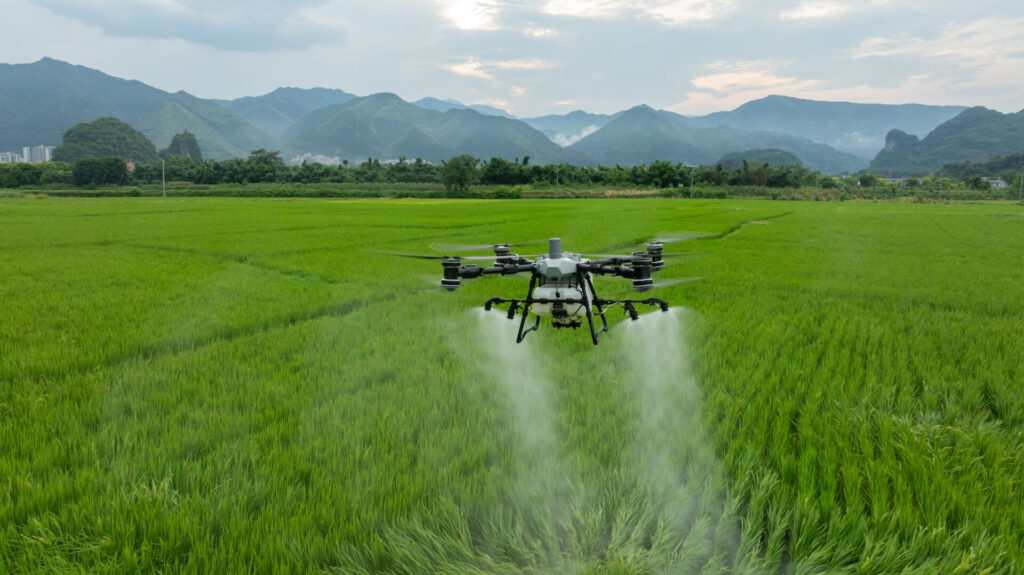
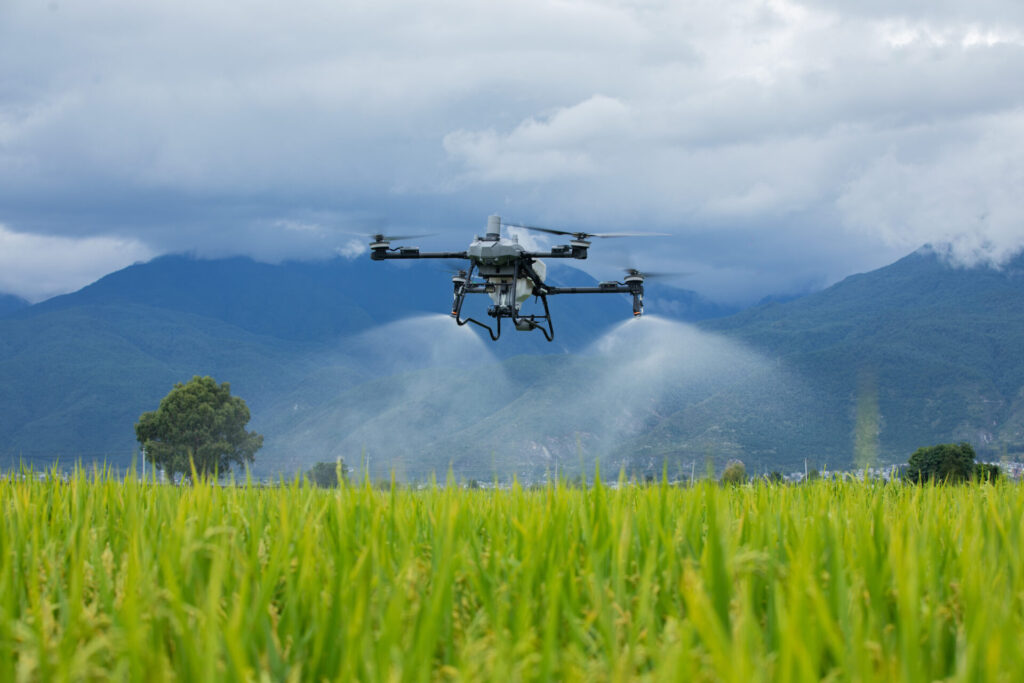
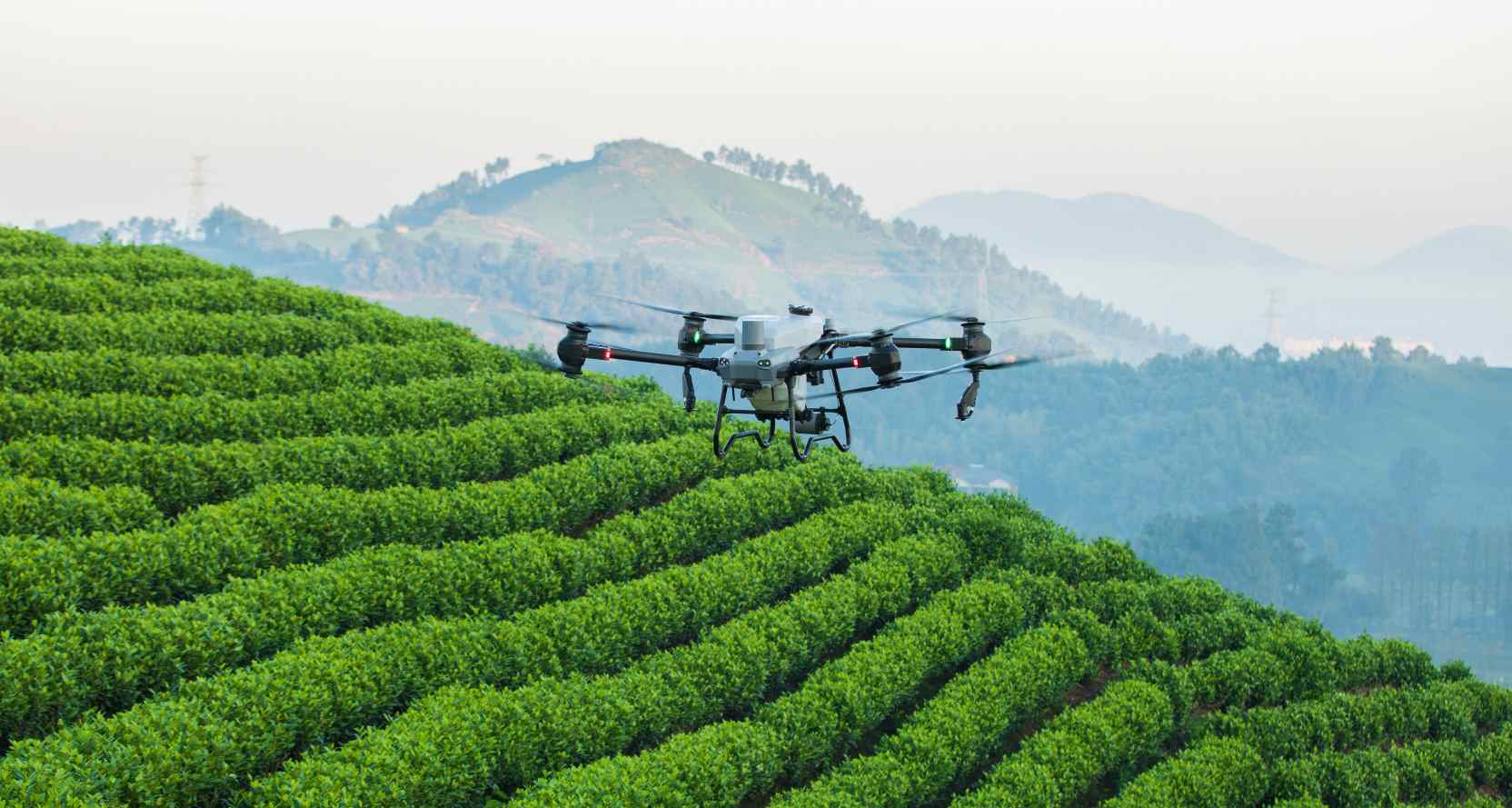
A spraying drone flies above the crop, not through it. In practice, that means it can work when:
- the field is muddy after rain and tyres sink,
- the crop has grown tall and the rows have closed (cotton, maize, vines late in the season),
- the field has slopes, terraces, poles or channels,
- you want to use the early-morning or late-afternoon hours, when wind and temperature favour application.
How a spraying drone works
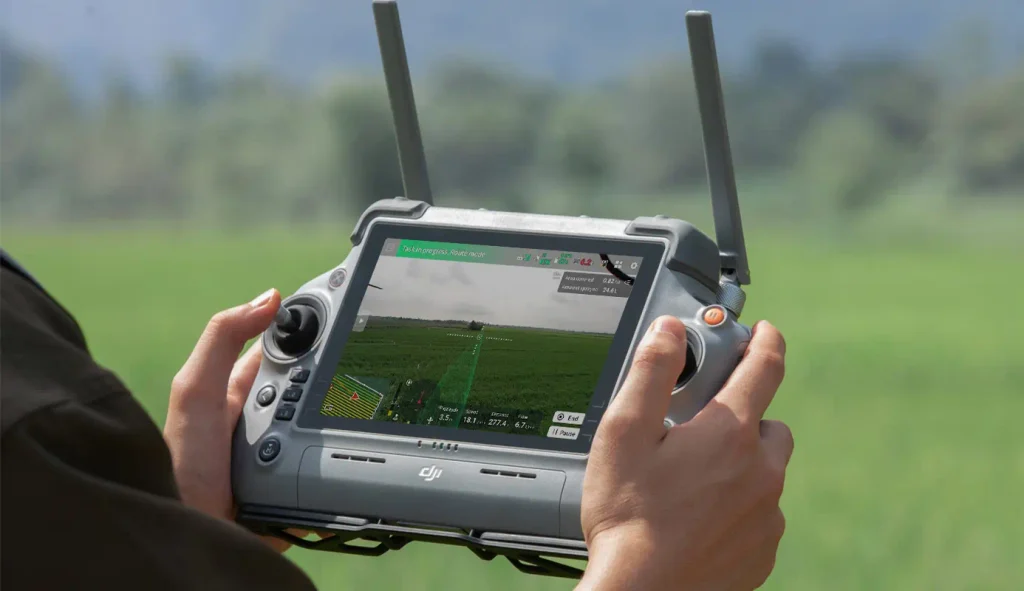
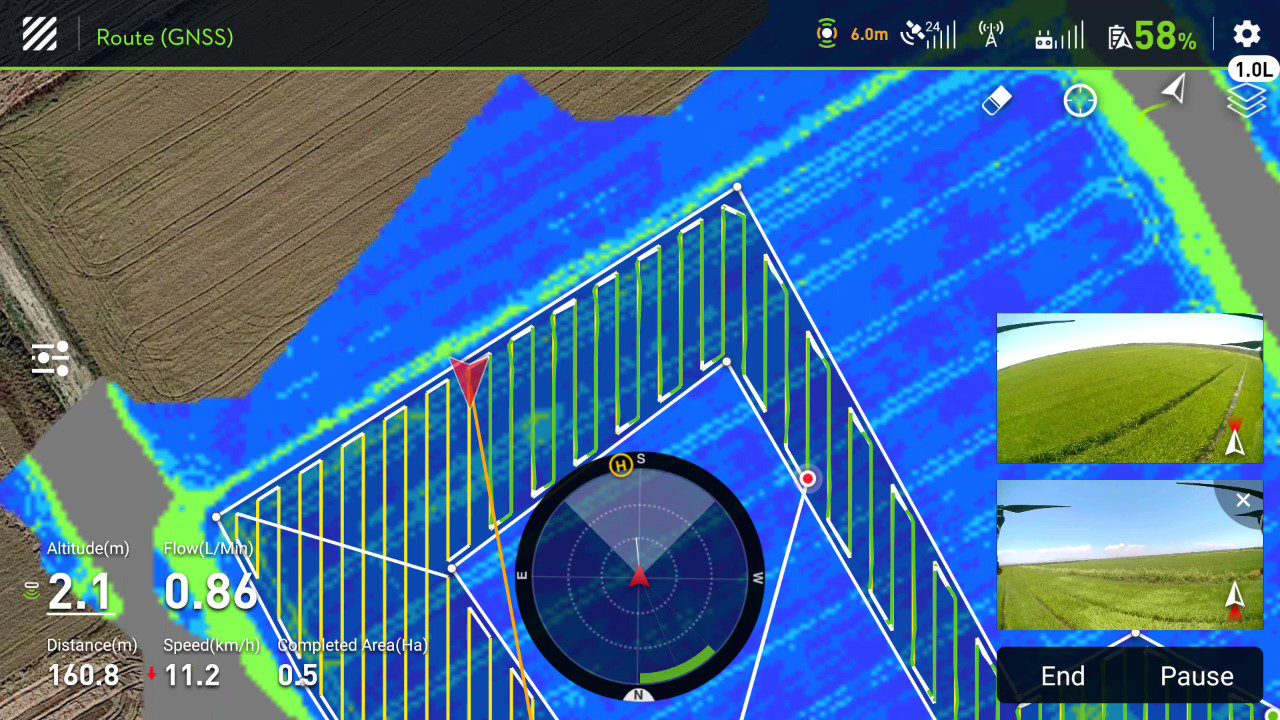
Current DJI AGRAS models fly autonomously with centimetre-level accuracy (±10 cm with RTK, according to the manufacturer). The operator maps the field boundary, sets the rate, height and spray width, and the drone flies the route on its own. It returns when it needs a refill or a battery change. The operator doesn’t “drive” row by row: they supervise and check.
Output per hour depends on the model (T100, T70P, T55, T25P), the crop, the application rate and the distance to the refill point. That is why it is best discussed for your own crop, rather than quoted from a catalogue.
Cost per stremma: the comparison that matters
The comparison only makes sense with your own numbers. Fill in the table below for your field:
| Cost item | Tractor | Drone |
|---|---|---|
| Product | Label rate | Label rate and aerial-spraying permit conditions |
| Water per stremma | The volume you spray today | Usually a much lower volume. Ask your agronomist. |
| Energy | Tractor fuel | Mains power or generator fuel for charging |
| Labour | Driver hours | Licensed operator hours |
| Wear and maintenance | Tyres, lubricants, sprayer | Batteries, propellers, nozzles, servicing |
| Indirect costs | Soil compaction, row damage, spray windows lost to mud | Dependence on weather and wind |
On small, fragmented fields the drone usually has the edge. On large, flat fields with organised work, the tractor remains competitive. To see when the investment pays back, read our spraying drone payback guide.
When the tractor stays
A drone isn’t the answer to everything. A well-equipped tractor is fast on large, flat fields, its driver doesn’t need flight training and it doesn’t depend on batteries. If you farm hundreds of stremmata of flat cotton with a good layout, the tractor will serve you well. But if part of your land is sloping, if rain arrives just when you need to spray, or if the rows have closed, that is where the drone makes the difference. That’s why most farmers we talk to end up combining the two: the tractor for large, organised jobs and the drone for the difficult applications.
If you stay with the tractor, an auto-steering system such as the FJD AT2 Max or the FJD ATS reduces overlaps and skips.
Before you decide: the legal framework
In Greece, aerial application of plant protection products, including by drone, is prohibited as a rule (Law 4036/2012) and only allowed by derogation, with a special permit from the Ministry of Rural Development and Food and flight authorisation from the Hellenic Civil Aviation Authority. More in our spraying drone buying guide.
Frequently asked questions
Does a drone spray as well as a tractor?
With the right rate, droplet size, height and spray width, drone application gives good coverage. The downwash from the propellers helps the spray penetrate the canopy. What matters is the correct setup for each crop, agreed with your agronomist.
Do I need a permit to spray with a drone?
Yes. The operator needs training and flight authorisation from the HCAA for the “specific” category, and spraying plant protection products requires a special aerial-spraying permit from the Ministry, granted by derogation. FLYDROPS explains what applies, and every purchase includes free two-day training (one day of theory, one day of practice).
Can I see the drone before buying?
Yes. The DJI AGRAS T100, T70P, T55 and T25P are at our base in Koufalia, Thessaloniki. Every purchase includes free two-day training (one day of theory, one day of practice) and free delivery.
What about servicing?
FLYDROPS was the first recognised official DJI AGRAS service centre in Northern Greece, with genuine spare parts, so you don’t need to send your drone far away.