Quick answer
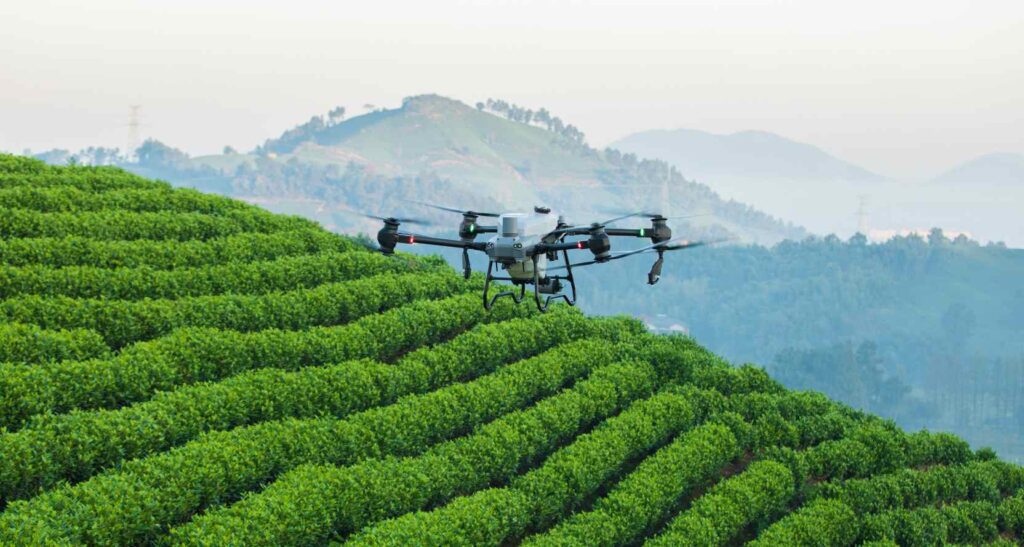
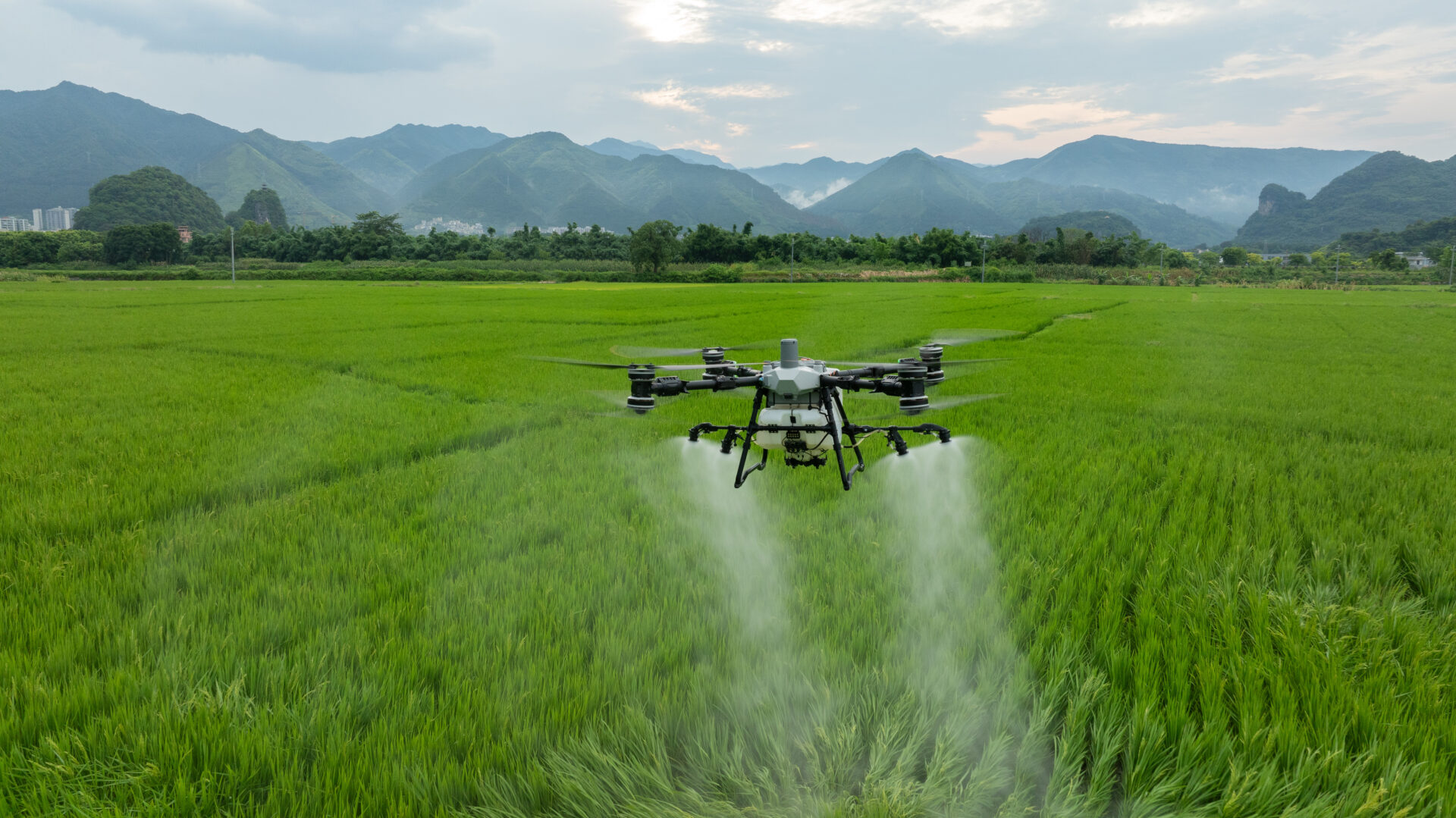
A spraying drone is worth it when it fits your field: the terrain, the acreage and the crop. In the DJI AGRAS range, the T100 suits professional operations and large farms, the T70P large areas, the T55 mixed crops and the T25P small and hard-to-reach plots. Before you buy, check the payback with your own numbers and the legal framework: in Greece, aerial application of plant protection products is only allowed by derogation, with a special permit.
Most farmers start with the wrong question: “how much does it cost?”. The right question is “does it suit my field?”, because the drone that suits your field also determines the cost. This guide walks you through the decision in the order it is made in practice: first your field, then the payback, then the legal side and, finally, the price.
Step 1: Start with your field, not the price
Every farm has a different “right” drone. The current DJI AGRAS range covers four sizes:
| Your field | The model that fits | Why |
|---|---|---|
| Large farms and professional operations | DJI AGRAS T100 | The flagship: 100 L spraying, 150 L spreading, lifting up to 100 kg, with LiDAR and the Penta-Vision system. |
| Large areas that need capacity | DJI AGRAS T70P | 70-litre spray tank and up to 70 kg spreading payload, with Safety System 3.0. |
| Mixed crops, frequent spraying and fertilising | DJI AGRAS T55 | 50-litre spray tank, spraying and spreading on one platform, easy to use and transport. |
| Hillside olive grove, vineyard or small farm on rough terrain | DJI AGRAS T25P | Compact and foldable, it reaches where a tractor can’t. Designed to be handled by one person. |
Not sure which model fits? Tell us about your crop, terrain and acreage and we will recommend the right size, not the most expensive one.
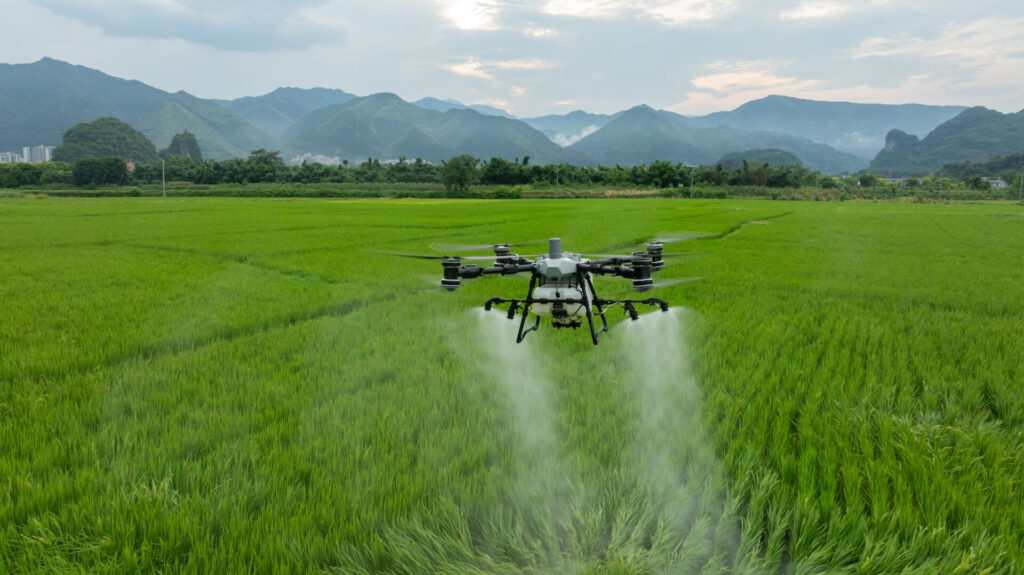
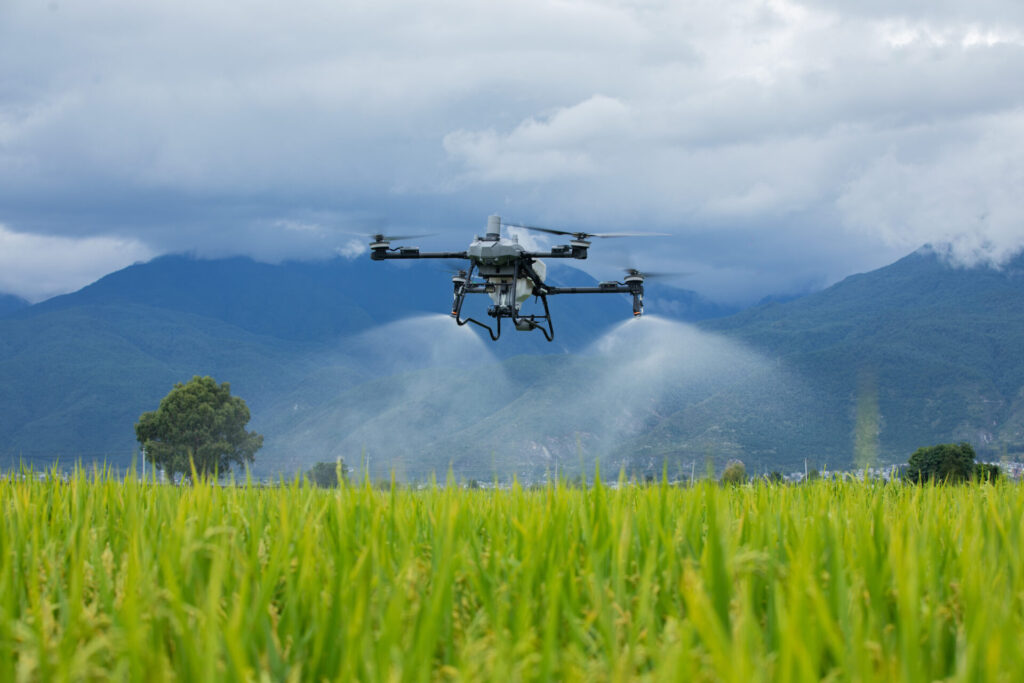
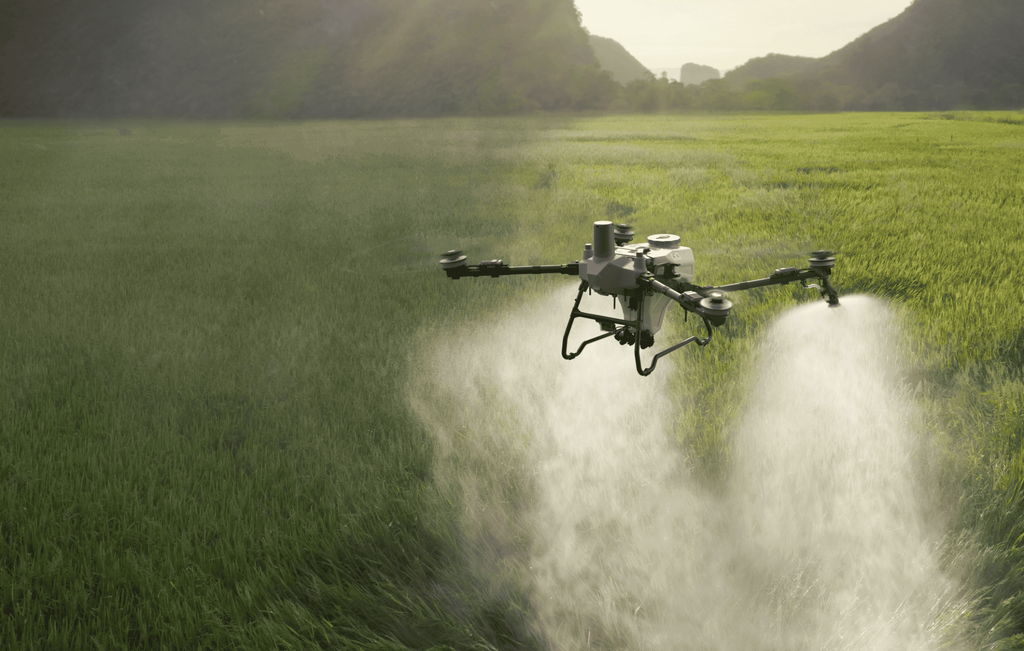
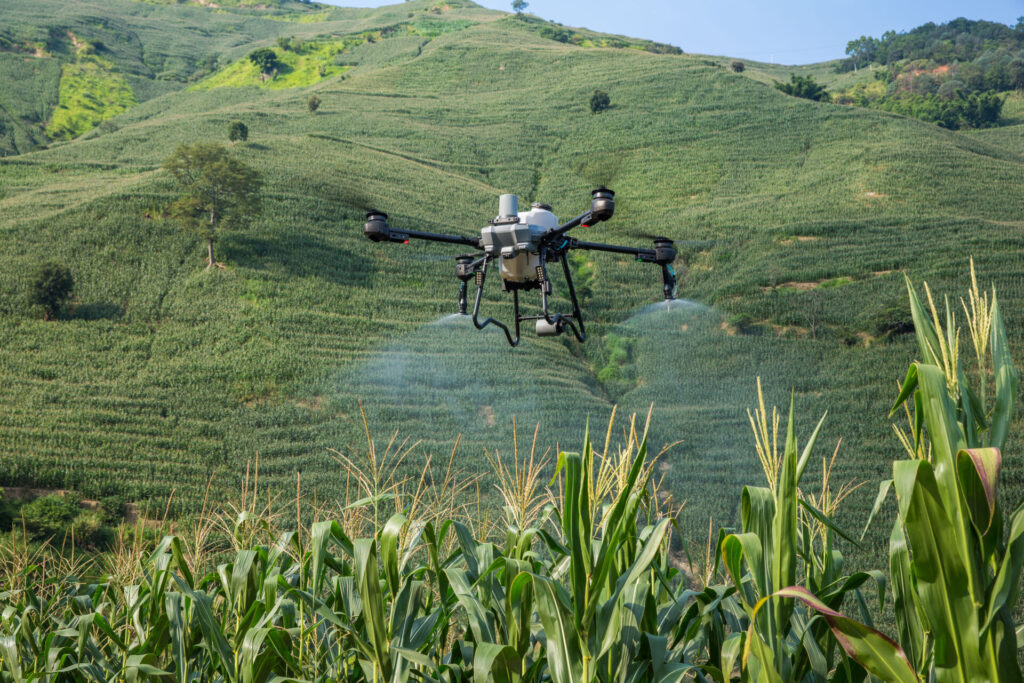
The four models side by side
| Specification | T100 | T70P | T55 | T25P |
|---|---|---|---|---|
| Spray tank | 100 L | 70 L | 50 L | 20 L |
| Spray flow rate | 30 L/min (2 sprinklers), 40 L/min (4 sprinklers) | 30 L/min (2 sprinklers), 40 L/min (4 sprinklers, optional) | 40 L/min (2 sprinklers), 50 L/min (4 mist sprinklers, optional) | 16 L/min (2 sprinklers), 24 L/min (4 sprinklers) |
| Effective spray width | 5–13 m | 4–11 m | 4–11 m | 4–7 m |
| Droplet size | 50–500 μm | 50–500 μm | 50–500 μm | 50–500 μm |
| Spreading payload | 100 kg | 70 kg | 55 kg | 25 kg |
| Spreading tank | 150 L | 100 L | 80 L | 30 L |
| Spreading flow rate | 400 kg/min | 400 kg/min | 400 kg/min | 190 kg/min |
| Lifting | 100 kg | 65 kg | 40 kg | — |
| Safety & vision | LiDAR, Penta-Vision, millimetre-wave radar | Safety System 3.0, tri-vision, radar | Quad-vision, AR display | Safety System 3.0, night-vision colour FPV camera |
| Accuracy with RTK | ±10 cm | ±10 cm | ±10 cm | ±10 cm |
Source: official DJI Agriculture specifications. Flow rate and width depend on configuration and working conditions.
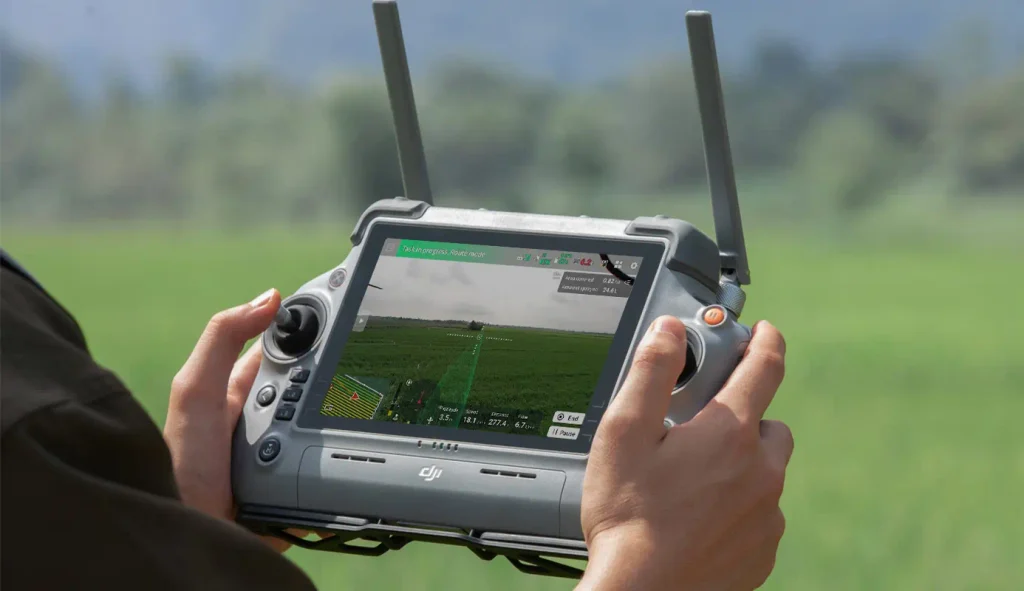
All four models work the same way: you map the field boundary, plan the route and the drone carries out the job autonomously, returning when it needs a refill or a battery change.
How fast does it work?
Output per hour depends on the model and, above all, on the crop. Over flat arable fields the drone flies faster and covers a wider swath. In olive groves, vineyards and orchards it flies lower and slower so the spray penetrates the canopy. The real figure depends on tree height and density, nozzle settings and the application rate.
That is why we don’t quote a catalogue figure for your olive grove. Discuss your crop and conditions with us, so you can work out the payback with realistic data.
Step 2: Work out the payback with your own numbers
To see whether it pays off, compare what spraying costs you today with the total cost of the drone. Use your own figures:
- Current cost per application: labour, fuel, machinery wear and time.
- Applications per year: how many spraying or fertilising passes each crop needs.
- Acreage: your own land and, if you plan to, contract work for others.
- Cost of the drone: purchase with batteries and charger, training, permits, insurance, maintenance and RTK subscription.
Time often changes the calculation. Spraying has a window: when the weather closes in, whoever finishes first protects the crop. The latest models are also equipped for night operation. The T100 and T70P have night navigation lights and radar for obstacle detection, while the T25P has a night-vision colour FPV camera and 75 W navigation lights.
Step 3: Make sure you operate legally
Important
In Greece, aerial application of plant protection products, including by drone, is prohibited as a rule (Articles 23 and 39 of Law 4036/2012). It is only allowed by derogation, with a special permit.
In practice, two approvals are required:
- Flight authorisation from the Hellenic Civil Aviation Authority (HCAA) for operations in the “specific” category, with the corresponding pilot training and an operational risk assessment.
- A special aerial-spraying permit from the Ministry of Rural Development and Food. It is granted by derogation, for a set period (up to 180 days), when the need is justified and there is no viable alternative.
Spraying is carried out under the permit holder’s responsibility, within its conditions (wind, temperature, humidity, buffer distances) and only with suitable products. The framework changes, so check with your regional agricultural directorate (ΔΑΟΚ) or agronomist before each season.
Be wary of anyone offering spraying services or equipment without explaining the permits: the responsibility falls on you. At FLYDROPS we explain what applies and train operators through DJI Academy Thessaloniki / FLYDROPS-3D.
Step 4: Look at the total cost, not just the drone
| Cost | What to ask for in a quote |
|---|---|
| Drone (T100, T70P, T55 or T25P) | A price for a complete working set: drone, batteries and charger, not a bare-drone price. Request a quote. |
| Operator training | Included free with a FLYDROPS purchase: two-day training, one day of theory and one day of practice. Ask what else you need for the HCAA flight licence. |
| Delivery | Free with a FLYDROPS purchase. |
| Permits | What your case needs (HCAA and Ministry) and what it costs. |
| Maintenance and insurance | Who services the drone, with which parts and how fast. What drone insurance costs. |
| RTK subscription | Annual cost of an RTK network subscription for precision flights. |
To put it plainly: a listing that is noticeably cheaper and comes without an official dealer usually doesn’t include genuine spare parts, authorised service or the DJI Agriculture warranty. FLYDROPS is part of DJI Agriculture’s official partner network and was the first recognised official DJI AGRAS service centre in Northern Greece, with genuine spare parts. That is the difference between a drone that works all season and one waiting for a part in the middle of it.
Step 5: Ask about funding before you buy, not after
There are funding schemes for precision-farming equipment, such as farm improvement plans and ESPA or LEADER programmes. Whether spraying drones are eligible is not a given, because of the aerial-spraying rules. Discuss it first with an agronomist or funding consultant. We can also tell you about a preferential-rate loan through a partner bank.
What’s included when you buy from FLYDROPS
- Free two-day training: one day of theory and one day of practice, so you start right from your first season.
- Free delivery of your equipment.
- Official DJI AGRAS service in Northern Greece, with genuine spare parts and warranty.
At our base (Ethnikis Antistasis 9, Koufalia, Thessaloniki) you can see the DJI AGRAS T100, T70P, T55, T25P and the Mavic 3 Multispectral up close. Phone +30 2391 301149, email info@flydrops.gr.
Frequently asked questions
How many hectares can a drone spray per hour?
It depends on the model and the crop. Output over flat fields is much higher than in olive groves, vineyards and orchards, where the drone flies lower and slower to cover the canopy. Tell us your crop and acreage for a realistic estimate.
Is drone spraying allowed in Greece?
Aerial application of plant protection products is prohibited as a rule by Law 4036/2012. It is only allowed by derogation, with a special aerial-spraying permit from the Ministry of Rural Development and Food (up to 180 days) and flight authorisation from the HCAA. Check with your regional agricultural directorate what applies each season.
Which model should I choose: T100, T70P, T55 or T25P?
It depends on your field: terrain, acreage and crop. The T100 suits professional operations, the T70P large areas, the T55 mixed crops and the T25P small and hard-to-reach plots. Contact us and we will recommend the right size.
Can the drone work at night?
The latest models are equipped for night operation: the T100 and T70P have night navigation lights and obstacle-detection radar, and the T25P a night-vision colour FPV camera and 75 W navigation lights. Flights are always carried out within the permit conditions.
Can I get funding for it?
There are programmes for precision-farming equipment (farm improvement plans, ESPA, LEADER), but the eligibility of spraying drones is not a given. Consult an agronomist or funding consultant before buying.
What happens if it breaks down mid-season?
FLYDROPS was the first recognised official DJI AGRAS service centre in Northern Greece, with genuine spare parts. In case of a fault we inspect and repair, or forward for repair, depending on the problem.
What is included with the purchase?
With every drone bought from FLYDROPS: free two-day training (one day of theory, one day of practice) and free delivery.
Where can I see the drones up close?
At the FLYDROPS base, Ethnikis Antistasis 9, Koufalia, Thessaloniki. Phone +30 2391 301149, email info@flydrops.gr.